


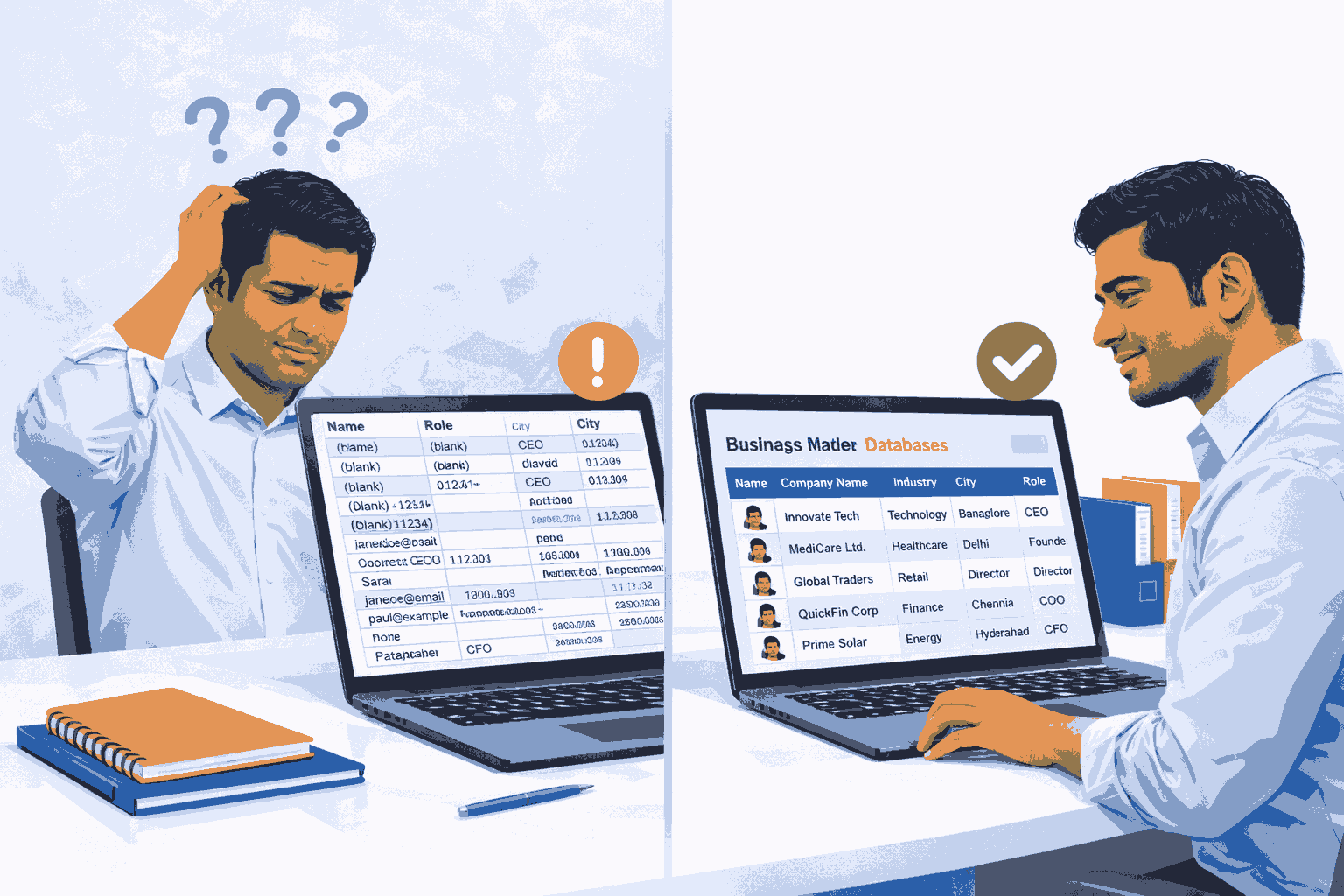
Why Businesses Waste Money Using Poorly Organized Data
Introduction
Many businesses collect large amounts of data. They believe that more data will help them grow faster.
However, this is not always true.
When data is poorly organized, it becomes difficult to use. Instead of helping the business, it creates confusion.
Companies may spend time, effort, and money working with data that does not provide clear insights.
Modern businesses are now focusing on structured and organized data instead of large but messy datasets.
Platforms such as GetDatabase
help organize business information in a structured way so companies can analyze markets more effectively.
Understanding why poorly organized data leads to wasted resources is important for better decision-making.
Poorly Organized Data Definition
Poorly organized data refers to information that is unstructured, incomplete, inconsistent, or difficult to analyze.
This type of data often lacks:
-
clear categories
-
industry classification
-
location grouping
-
professional role identification
As a result, businesses struggle to use the data effectively.
Companies often rely on structured Business Databases
to avoid these problems and work with organized company information.
Why Poorly Organized Data Leads to Waste
Poor data organization creates multiple problems for businesses. These problems often lead to wasted time, effort, and money.
Below are the main reasons.
1. Time Wasted in Data Cleaning
When data is unorganized, teams must spend time fixing it.
They often need to:
-
remove duplicates
-
verify company information
-
categorize industries
-
identify locations
This process takes time and delays business activities.
2. Incorrect Market Understanding
Poorly organized data makes it difficult to understand markets.
Businesses may not know:
-
which industry a company belongs to
-
where the company operates
-
how the company fits into the market
Without this clarity, decisions become inaccurate
Structured datasets such as Industry Databases help businesses understand markets more clearly.
3. Difficulty Identifying Relevant Companies
When data lacks structure, businesses cannot easily identify relevant organizations.
For example:
-
companies from different industries may be mixed together
-
important company details may be missing
This makes it difficult to focus on the right businesses.
4. Lack of Decision-Maker Information
Poor data often does not include leadership roles.
Businesses may not know:
-
who manages the company
-
who makes decisions
-
how the company is structured
Structured datasets like CXO Databases help businesses understand leadership roles clearly.
5. Inefficient Resource Usage
When data is unclear, teams spend more time organizing information than analyzing it.
This leads to:
-
wasted effort
-
delayed decision-making
-
reduced productivity
Businesses lose valuable time that could be used for strategic planning.
How Poor Data Affects Business Growth
Poor data organization does not just waste time. It also affects business growth.
Slower Decision Making
Without clear information, decisions take longer.
Limited Market Insights
Businesses cannot understand industry trends properly.
Reduced Efficiency
Teams spend time fixing data instead of using it.
Missed Opportunities
Important market opportunities may go unnoticed.
These problems reduce overall business performance.
How Structured Data Solves These Problems
Structured data organizes information into clear categories.
This helps businesses work more efficiently.
Key benefits include:
Organized Company Information
Data is grouped by industry, location, and company type.
Faster Analysis
Businesses can quickly study markets without cleaning data.
Better Decision Making
Leadership teams can rely on accurate information.
Improved Productivity
Teams spend less time organizing data and more time using it.
Platforms like GetDatabase
help businesses access structured company data for better research and planning.
Key Takeaways
-
Poorly organized data is difficult to analyze and use.
-
Businesses waste time cleaning and verifying unstructured data.
-
Lack of structure leads to incorrect market understanding.
-
Missing leadership and industry information reduces data value.
-
Structured data improves efficiency and decision-making.
Frequently Asked Questions (FAQs)
What is poorly organized data?
Poorly organized data is information that lacks structure, making it difficult to analyze and use.
Why does poor data organization waste money?
Businesses spend time and resources cleaning, verifying, and organizing data instead of using it effectively.
How does poor data affect business decisions?
Unclear data leads to incorrect insights, which results in poor decision-making.
What is structured data?
Structured data is organized information arranged into clear categories such as industry, location, and company roles.
How can businesses improve data organization?
Businesses can use structured datasets that categorize information clearly for better analysis.