


What Is a Professional Database (And What It Is Not)
Introduction
Businesses often hear the term professional database, but many misunderstand what it actually means.
Some people think it is just a list of contacts. Others believe it is a tool for marketing or messaging.
Both ideas are incomplete.
A professional database is not just about collecting information. It is about organizing business and professional data in a structured way so it can be used for research and understanding.
When businesses clearly understand what a professional database is—and what it is not—they can use data more effectively.
Platforms such as GetDatabase
help organize professional and business data in a structured format for research and planning.
Professional Database Definition
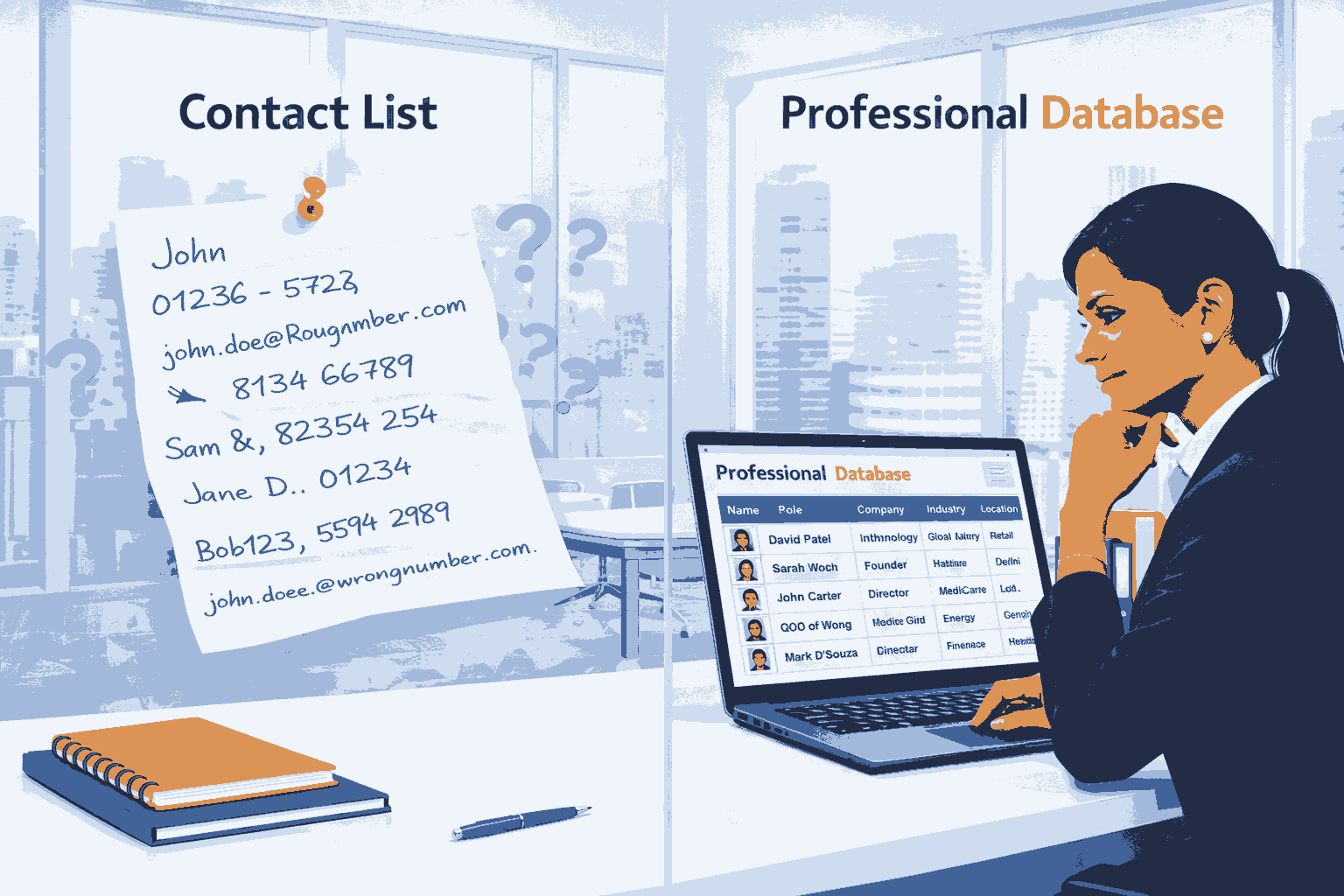
A professional database is a structured collection of information about individuals working in companies, including their roles, industries, and business associations.
This data is organized into clear fields such as:
-
professional name
-
job role (founder, manager, executive)
-
company name
-
industry
-
business location
Because the information is structured, businesses can understand professional roles within organizations.
Companies often use structured Business Databases
along with professional datasets to study both companies and the people working within them.
What a Professional Database Is
Understanding what a professional database actually does is important.
Below are its key characteristics.
1. Organized Professional Information
A professional database organizes data about individuals working in companies.
This includes:
-
roles
-
industries
-
company connections
This structure helps businesses understand how companies are built.
2. Focus on Business Roles
Professional databases focus on people in business roles.
Examples include:
-
founders
-
executives
-
directors
-
managers
These roles help businesses understand decision-making structures.
For example, organizations may explore CXO Databases
to understand executive leadership within companies.
3. Supports Business Research
Professional databases are mainly used for:
-
understanding company structures
-
studying leadership patterns
-
analyzing industries
They help businesses gain insights into how organizations operate.
4. Structured and Searchable Data
The data is organized in a way that allows easy filtering and analysis.
Businesses can search based on:
-
role
-
industry
-
location
This makes research faster and more efficient.
What a Professional Database Is Not
Many people misunderstand professional databases. It is important to clarify what they are not.
1. Not a Random Contact List
A professional database is not just a collection of phone numbers or emails.
Random contact lists lack structure and context.
Professional databases provide organized information about individuals and their roles.
2. Not a Marketing Tool
A professional database does not send messages or run campaigns.
It is not used for:
-
advertising
-
messaging
-
automated outreach
It only provides structured data for research and planning.
3. Not a Lead Generation System
A professional database does not guarantee leads or conversions.
It provides information that businesses can use for their own strategies.
4. Not Unstructured Data
Professional databases are carefully organized.
They are different from messy spreadsheets or scattered data sources.
Structured data allows businesses to analyze information more effectively.
Why Professional Databases Are Important
Professional databases help businesses understand the people behind companies.
This is important because:
-
decisions are made by individuals
-
leadership shapes company direction
-
understanding roles improves research
Businesses often combine professional data with industry data.
For example, companies studying sectors may explore Industry Database
to understand companies along with their leadership structures.
Common Problems Without Professional Databases
Without structured professional data, businesses face several challenges.
Unclear Leadership Structure
Companies cannot identify who manages decisions.
Limited Business Understanding
Businesses only see company names, not the people behind them.
Time-Consuming Research
Teams must manually find information about professionals.
Incomplete Analysis
Without professional data, research remains partial.
Structured datasets solve these problems by organizing professional information clearly.
How Professional Databases Improve Business Research
Professional databases improve business research in several ways.
Clear Role Identification
Businesses can identify founders, executives, and managers.
Better Company Understanding
Organizations can understand how companies are structured.
Faster Research
Structured data reduces the time needed to gather information.
Improved Decision Making
Businesses can make informed decisions using accurate data.
Platforms like GetDatabase
help organize professional and company data for better analysis.
Key Takeaways
-
A professional database organizes information about individuals in companies.
-
It focuses on roles such as founders, executives, and managers.
-
It is not a contact list, marketing tool, or lead generation system.
-
Structured professional data improves business research.
-
Understanding leadership helps businesses analyze companies better.
Frequently Asked Questions (FAQs)
What is a professional database?
A professional database is a structured collection of information about individuals working in companies, including their roles and business associations.
What kind of information is included in a professional database?
It includes names, job roles, company names, industries, and locations.
Is a professional database a contact list?
No. It is more structured and includes detailed information about roles and companies.
Is a professional database used for marketing?
No. It is used for research and understanding business structures.
Why do businesses use professional databases?
Businesses use them to understand leadership roles, company structures, and industry patterns.