


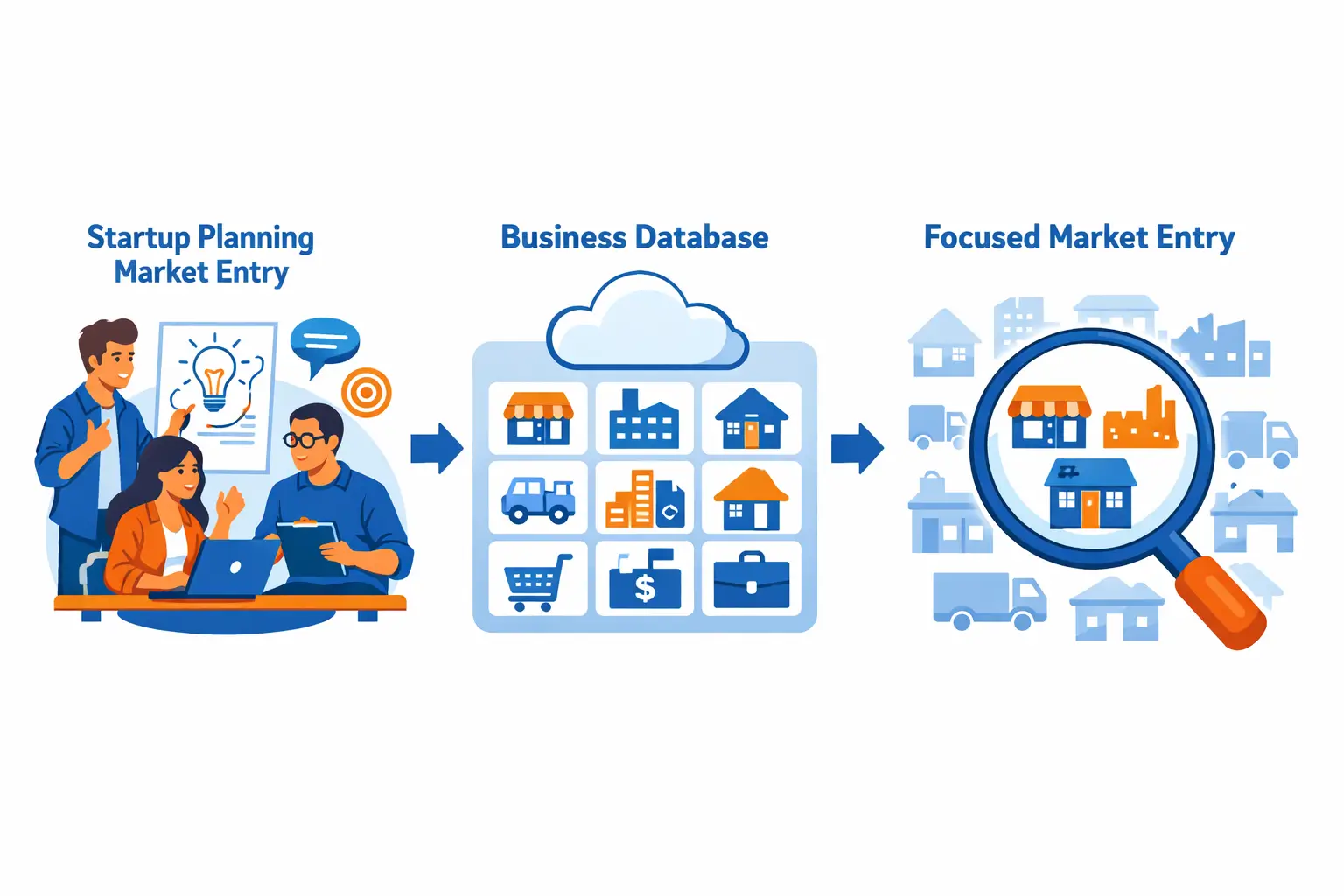
market entry for startups
Market entry decides startup survival.
However, many startups enter blindly.
In reality, ideas are not the problem.
Instead, lack of data creates failure.
Because of this, startups waste money early.
As a result, growth slows down.
This blog explains how startups use business databases for market entry, in simple and practical steps.
What Market Entry Means for Startups
market entry for startups
Market entry means entering a new market with clarity.
Startups need to know:
- Who to target
- Where to operate
- Which businesses matter
Without data, guesses increase.
Therefore, structured information becomes critical.
Most startups begin research using a COMPANY DATABASE
Why Startups Struggle During Market Entry
market entry for startups
Many startups rely on assumptions.
However, assumptions create risk.
For example:
- Wrong industries get targeted
- Wrong locations get chosen
- Wrong decision-makers get approached
Because of this, early traction fails.
As a result, budgets burn fast.
That is why startups move toward a BUSINESS CORPORATE DATABASE IN INDIA
How Business Databases Support Startup Market Entry
Business databases provide structure.
They organize data by:
- Industry
- Location
- Business type
Instead of guessing, startups analyze clearly.
Therefore, entry plans become realistic.
Platforms like GETDATABASE
support this structured approach.
Step-by-Step: How Startups Use Business Databases
Step 1: Identify the Right Industry
Startups first select the industry.
For example, education startups focus on schools only.
Because of this, relevance improves.
Many founders rely on a PRIVATE SCHOOLS DATABASE
Step 2: Find the Right Decision-Makers
Next, startups identify authority.
Most early conversations target:
- Founders
- CEOs
- Business heads
Therefore, outreach reaches power.
For leadership targeting, startups use a CEO DATABASE IN INDIA
Step 3: Choose the Right Location
Location affects pricing and demand.
Different regions behave differently.
Because of this, location clarity matters.
Startups often use a PINCODE-WISE DATABASE
Step 4: Validate Market Size
Before launching fully, startups validate scale.
They check:
- Number of businesses
- Geographic spread
- Industry concentration
As a result, risk reduces.
Business Databases vs Guess-Based Market Entry
Guess-based entry creates chaos.
However, data-based entry creates confidence.
Guess-based entry:
- Burns cash
- Delays traction
Database-based entry:
- Saves money
- Improves focus
Structure always performs better.
Why Business Databases Reduce Startup Failure
Startups have limited time.
Therefore, mistakes cost more.
Business databases help startups:
- Test markets faster
- Avoid wrong segments
- Improve early traction
As a result, survival chances increase.
Responsible Use of Business Data
Startups must use data responsibly.
Rules are defined in the TERMS OF USE
Limitations are explained in the PLATFORM DISCLAIMER
Responsible use protects startups legally.
Final Thoughts on Startup Market Entry
Market entry is not about speed alone.
However, clarity decides success.
Business databases reduce confusion.
Therefore, startups enter markets smarter.
Strong data creates strong foundations.
Frequently Asked Questions (FAQs)
What is market entry for startups?
It is the process of entering a new market.
Why do startups need business databases?
They reduce guesswork and improve focus.
Are business databases expensive for startups?
No. Wrong decisions cost more.
Do business databases guarantee success?
No. However, they improve clarity and efficiency.