


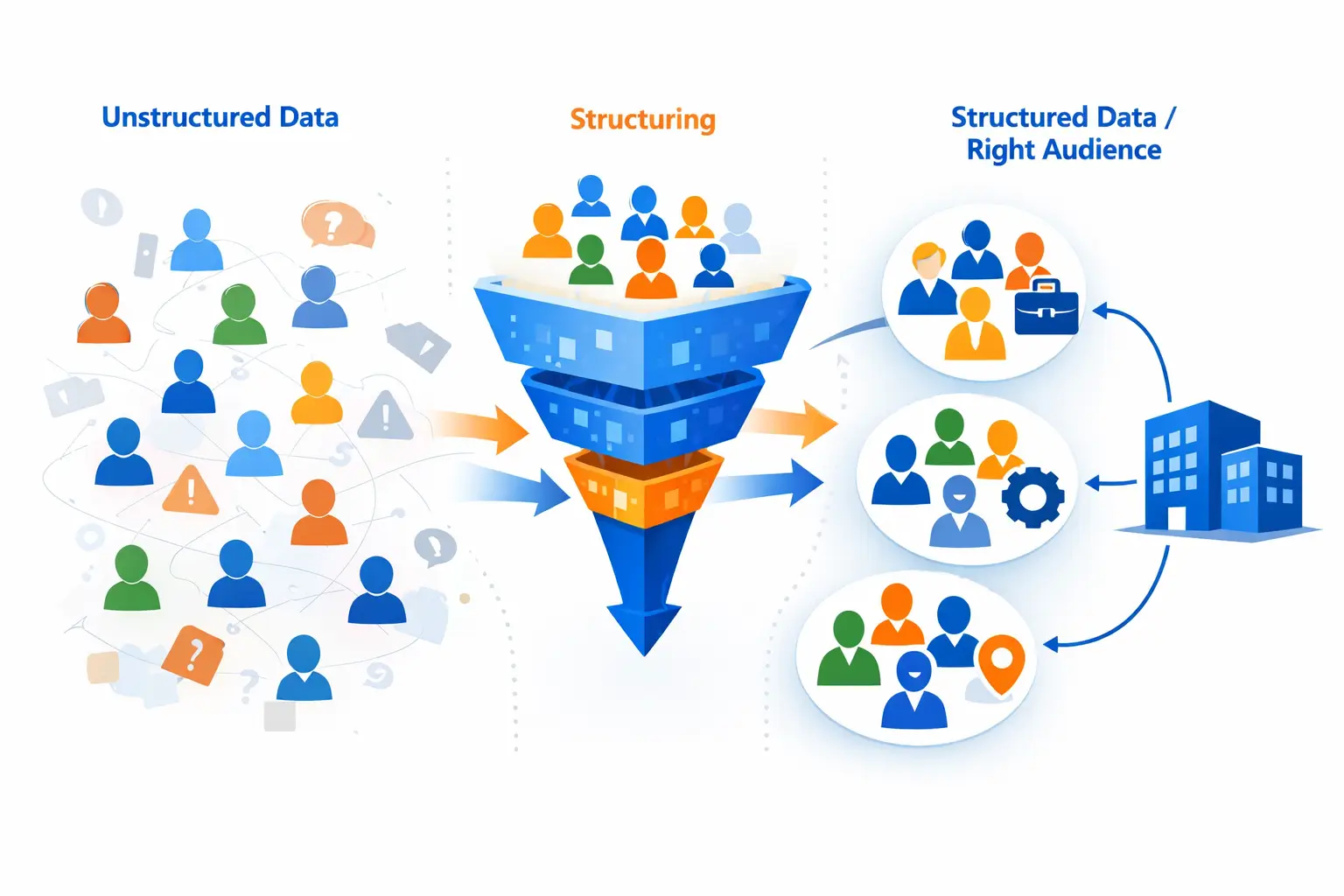
Introduction
structured data
Every business wants one thing.
They want to reach people who actually care.
However, most companies face a common problem.
They talk to many people, but very few respond.
This happens because outreach starts without clarity.
When data is unstructured, companies do not know who their real audience is.
That is why structured data matters.
It helps companies stop guessing and start targeting.
What Is Structured Data? (Very Simple Explanation)
structured data
Structured data means organized information.
Instead of mixing everything together, data is clearly arranged by:
- Industry
- Job role
- Location
- Business size
Because of this structure, companies understand who to talk to before they start outreach.
Platforms like GETDATABASE
exist for this exact reason—to organize business data so decisions become easier.
Why Finding the Right Audience Is So Difficult
structured data
Many companies collect data quickly.
However, they do not organize it properly.
As a result:
- Decision-makers get mixed with staff
- Industries overlap
- Locations lose importance
Because of this confusion, outreach feels random.
Random outreach rarely works.
How Structured Data Changes Everything
structured data
Structured data flips the process.
Instead of contacting everyone, companies filter first.
Because of that, every message feels more relevant.
Let us break this down clearly.
1. Structured Data Separates the Right Industry
Every industry behaves differently.
For example:
- Schools plan yearly
- IT companies move faster
- Manufacturers think in production cycles
Because of this difference, companies rely on focused data such as a COMPANY DATABASE IN INDIA
As a result, outreach stays relevant from the first step.
2. Structured Data Helps Reach Decision-Makers
Not everyone can say “yes”.
However, unstructured lists mix:
- Owners
- Managers
- Interns
Structured data fixes this problem.
That is why companies use role-specific datasets like a CEO DATABASE IN INDIA
or a C-LEVEL EXECUTIVES DATABASE
Because of this clarity, conversations move faster.
3. Structured Data Filters by Location
Location affects:
- Language
- Regulations
- Buying behavior
Still, many companies ignore this.
Structured data solves it through location filters like a PINCODE-WISE BUSINESS DATABASE
As a result, outreach feels local and natural, not forced.
4. Structured Data Matches Business Size
A small business and a large enterprise do not think the same way.
However, random lists treat them equally.
Structured data separates:
- MSMEs
- Startups
- Enterprises
That is why companies prefer an MSME COMPANY DATABASE
instead of one large mixed list.
This alignment improves response quality.
5. Structured Data Reduces Noise and Increases Focus
More contacts do not mean better results.
Better contacts do.
Structured data removes noise by:
- Filtering irrelevant entries
- Reducing wasted effort
- Improving message relevance
Because of this focus, teams see better outcomes with less work.
A Simple Way to Understand This
Think about a library.
Books are arranged by:
- Subject
- Author
- Category
Without structure, finding one book becomes impossible.
In the same way, structured data helps companies find the right audience quickly.
Why Structured Data Works Better Over Time
Structured data is reusable.
It helps companies:
- Learn from past results
- Improve targeting
- Refine strategies
Because of this, results improve with every campaign.
That is why proper usage rules are defined in the TERMS OF USE
and the PLATFORM DISCLAIMER
Common Mistake Companies Still Make
Many companies do this:
- Collect data
- Start outreach
- Hope for results
This order fails.
The correct order is:
- Structure the data
- Identify the audience
- Start outreach
Sequence matters.
Final Summary
- Structured data organizes business information
- It helps companies identify the right audience
- Decision-makers become reachable
- Outreach becomes relevant
- Time and effort reduce
- Results improve naturally
Finding the right audience is not luck.
It is a data structure decision.
Frequently Asked Questions (FAQs)
What does structured data mean in business?
It means organizing business data by industry, role, location, and size.
Why does structured data improve outreach?
Because it helps companies contact relevant people instead of random contacts.
Can small businesses use structured data?
Yes. Small businesses benefit the most because focus saves effort.
Does structured data guarantee success?
No. However, it improves relevance and reduces mistakes.