


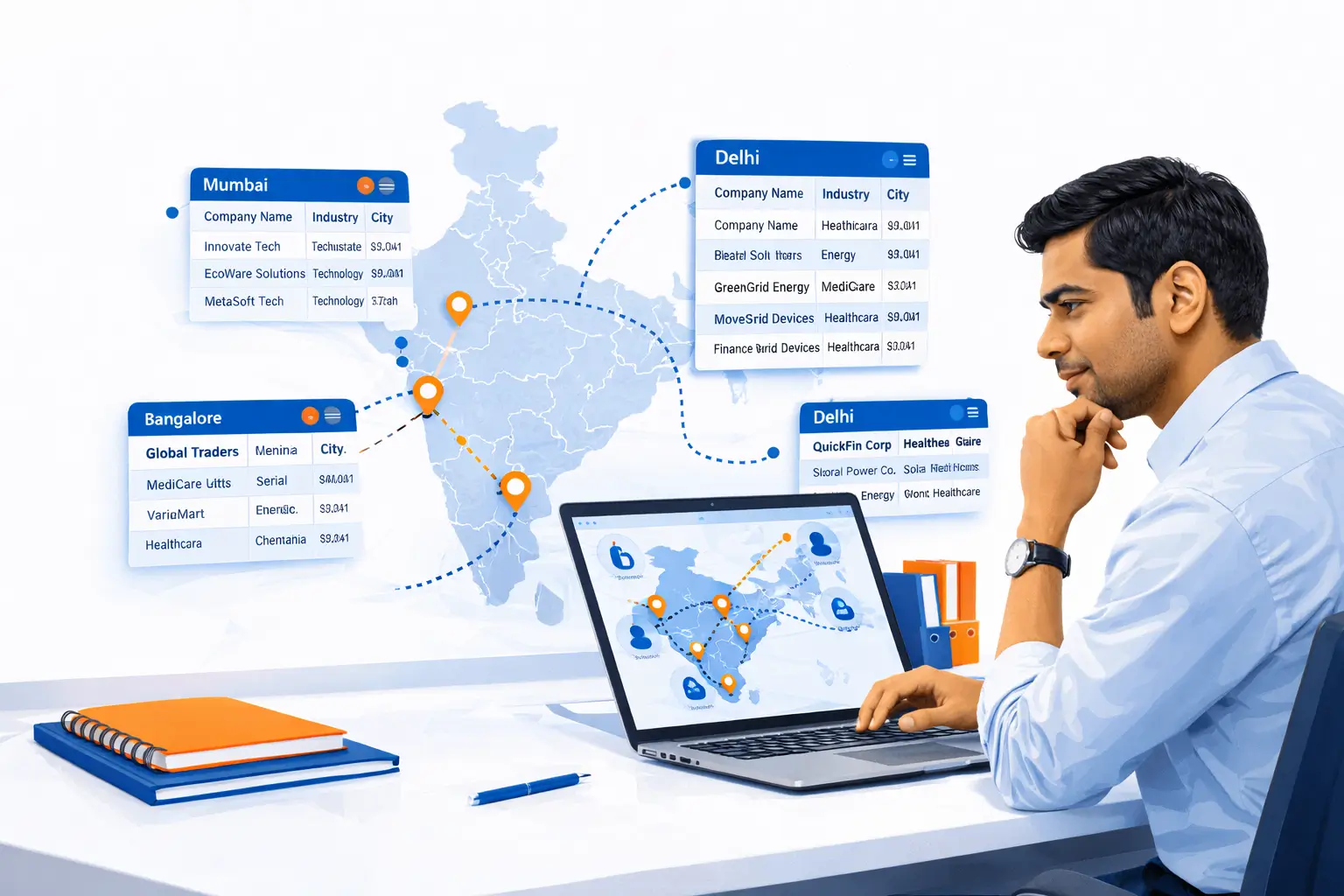
How Location-Based Databases Help Companies Expand into New Regions (Simple Guide)
Introduction
When companies want to grow, they often expand into new cities or regions.
However, entering a new market is not easy. Businesses need to understand:
-
which companies operate in that area
-
how the market works
-
who the key players are
Without proper information, expansion becomes difficult.
This is where location-based databases become useful.
Location-based databases organize companies based on geographic areas such as cities, states, or countries. This helps businesses understand regional markets in a structured way.
Platforms such as GetDatabase
help organize company information by location so businesses can study regional markets more clearly.
Location-Based Database Definition
A location-based database is a structured collection of companies organized by geographic location such as city, state, or country.
These databases group companies based on where they operate.
Typical data includes:
-
company name
-
city or region
-
industry
-
business type
-
leadership roles
Because the data is organized by location, businesses can easily study specific regions.
Companies often explore structured Business Databases
to understand company distribution across locations.
Why Location Data Is Important for Expansion
When a business enters a new region, it must first understand the local market.
Location-based data helps companies answer important questions:
-
Which companies are already operating there?
-
Which industries are strong in that region?
-
How competitive is the market?
Without this information, businesses may make wrong decisions.
How Location-Based Databases Support Regional Expansion
Location-based databases help businesses expand more effectively. Below are the key ways they support growth.
1. Understanding Local Markets
Every region has a different business environment.
Location-based databases help companies understand:
-
local industries
-
number of businesses
-
market activity
For example, companies studying city-level markets may explore Mumbai Business Databases
to understand how businesses operate in Mumbai.
This helps companies prepare before entering the market.
2. Identifying Regional Opportunities
Some regions have strong demand in specific industries.
Location-based data helps businesses identify:
-
growing markets
-
active industries
-
business clusters
This allows companies to focus on regions where opportunities are higher.
3. Better Industry Mapping by Location
Industries are not evenly distributed.
Some cities specialize in certain sectors.
For example:
-
one city may have strong manufacturing
-
another may focus on technology
-
another may lead in finance
Businesses can combine location and industry data using Industry Databases
to understand where industries are concentrated.
4. Understanding Local Business Networks
Businesses do not operate alone. They form networks within regions.
Location-based databases help companies see:
-
groups of related businesses
-
regional clusters
-
industry ecosystems
This helps businesses understand how companies are connected locally.
5. Supporting Strategic Planning
Before expanding, companies must plan carefully.
Location-based data helps businesses:
-
choose the right city
-
understand competition
-
study market structure
Structured datasets support better planning.
Platforms like GetDatabase
help businesses analyze regional company data in a structured way.
Common Problems Without Location-Based Data
Without location-focused data, businesses face several challenges.
No Clear Market Understanding
Companies cannot easily understand regional markets.
Mixed Data From Different Regions
Data may include companies from many locations without separation.
Poor Expansion Decisions
Businesses may choose the wrong region due to lack of information.
Time-Consuming Research
Teams must manually find and organize regional data.
Location-based databases solve these problems by organizing companies by region.
Why Businesses Prefer Location-Based Databases
Modern businesses prefer structured location data because it improves decision-making.
Key benefits include:
Clear Regional Insights
Businesses can study specific cities or regions.
Faster Market Research
Data is already organized by location.
Better Expansion Planning
Companies can choose regions based on real data.
Improved Market Understanding
Businesses can analyze local company ecosystems.
Structured platforms such as GetDatabase data so businesses can understand regional markets better.
Key Takeaways
-
Location-based databases organize companies by geographic area.
-
Businesses use them to understand regional markets.
-
These databases help identify opportunities in specific cities.
-
Location data supports better expansion decisions.
-
Structured regional data improves research and planning.
Frequently Asked Questions (FAQs)
What is a location-based database?
A location-based database is a structured dataset that organizes companies based on geographic location.
Why is location data important for business expansion?
Location data helps businesses understand regional markets and choose the right areas for growth.
How do companies use location-based databases?
Companies use them to analyze markets, study industries, and identify businesses in specific regions.
What information is included in location-based databases?
These databases include company names, locations, industries, and business details.
Do location databases help in market research?
Yes. They help businesses understand regional business ecosystems and plan expansion strategies.