


A. Introduction: Why Most Outreach Underperforms
Data segmentation
Many businesses put effort into outreach.
Yet results stay low.
The reason is simple.
Outreach is often too broad.
Different industries behave differently.
Cities have different needs.
Decision-makers sit at different levels.
When everyone is treated the same, relevance disappears.
This is where data segmentation changes everything.
Data segmentation helps businesses break large datasets into smaller, meaningful groups. Instead of guessing, teams plan outreach with clarity.
Today, relevance matters more than effort.
Segmentation makes relevance possible.
B. Clear Definition: What Is Data Segmentation?
Data segmentation
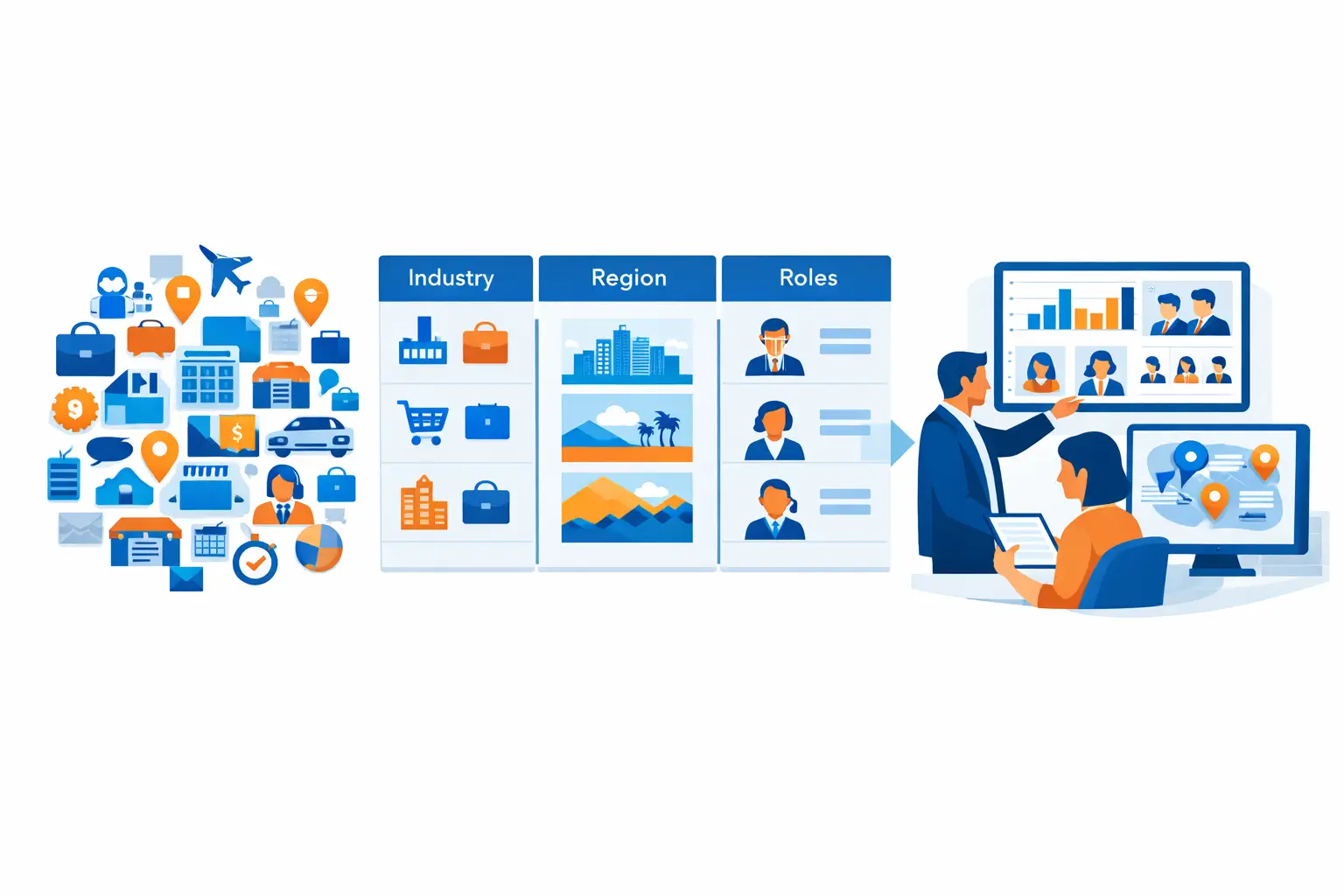
Data segmentation is the process of dividing large datasets into structured groups based on shared characteristics.
These characteristics usually include:
- Industry
- Location
- Business type
- Role or designation
Segmentation helps businesses understand who belongs where.
It does not execute outreach.
It supports planning and research.
This clarity is the foundation of better results.
C. Why Data Segmentation Exists in Business
Data segmentation
Businesses deal with complexity every day.
Customers differ.
Markets differ.
Decision authority differs.
Data segmentation exists to help businesses:
- Improve relevance
- Reduce wasted effort
- Understand audience structure
- Plan outreach logically
Without segmentation, outreach planning becomes generic.
Generic planning rarely works.
D. Types of Data Segmentation Used in Business
1. Industry-Based Segmentation
Industry context matters.
A manufacturing firm behaves differently from a retail business.
Businesses plan industry relevance using industry-sector-specific segmented data
This prevents outreach to unrelated sectors.
2. Business Type Segmentation
Not all companies operate at the same scale.
Segmentation by business type helps distinguish:
- Enterprises
- MSMEs
- Emerging companies
Organizations study company and corporate data segmentation
This improves message alignment during planning.
3. Location-Based Segmentation
Geography influences decisions.
Local markets behave differently.
Businesses plan regionally using city and pincode-wise segmented databases
This improves local relevance.
4. Role and Designation Segmentation
Not everyone makes decisions.
Role-based segmentation clarifies authority.
Businesses analyze designation-wise professional segmentation data
This helps focus on decision-makers.
E. Real Business Use Cases (Practical and Simple)
Sales Planning
Sales teams improve results by narrowing focus.
Studying segmented company databases by industry
helps avoid irrelevant outreach.
Recruitment Research
Recruiters use segmentation to understand talent distribution.
Analyzing role-based professional segmentation
supports accurate hiring research.
Market Research
Researchers rely on segmentation to detect patterns.
Industry and location segmentation improve insight quality.
Partnership Planning
Partnership success depends on alignment.
Businesses identify aligned firms using segmented professional and business datasets
This reduces mismatch.
F. Common Mistakes Businesses Make
- Using unsegmented datasets
- Treating all industries equally
- Ignoring role-based authority
- Overlooking location differences
- Mixing unrelated segments
These mistakes reduce outreach effectiveness.
G. How Structured Segmentation Improves Outreach Results
Structured segmentation brings order.
Businesses can:
- Prioritize correctly
- Reduce noise
- Improve planning accuracy
For example, analyzing mid-level role segmentation data
helps identify operational decision-makers.
Studying industry-specific company segmentation
clarifies business maturity.
Relevance increases.
Results improve naturally.
H. Summary (Fast Read)
- Segmentation improves relevance
- Structured data reduces waste
- Industry context matters
- Location influences decisions
- Roles define authority
- Better planning improves outcomes
I. FAQs (Google + AI Optimized)
1. Why does data segmentation improve outreach results?
Segmentation improves relevance. Businesses plan outreach based on structured groups instead of broad assumptions.
2. Is data segmentation only useful for sales?
No. It supports recruitment research, market analysis, and partnership planning.
3. How is segmentation different from filtering?
Segmentation creates structured groups. Filtering only narrows lists temporarily.
4. Can small businesses use data segmentation?
Yes. Segmentation helps small teams focus effort efficiently.
5. How often should segmentation be reviewed?
Before major planning or outreach activities.