


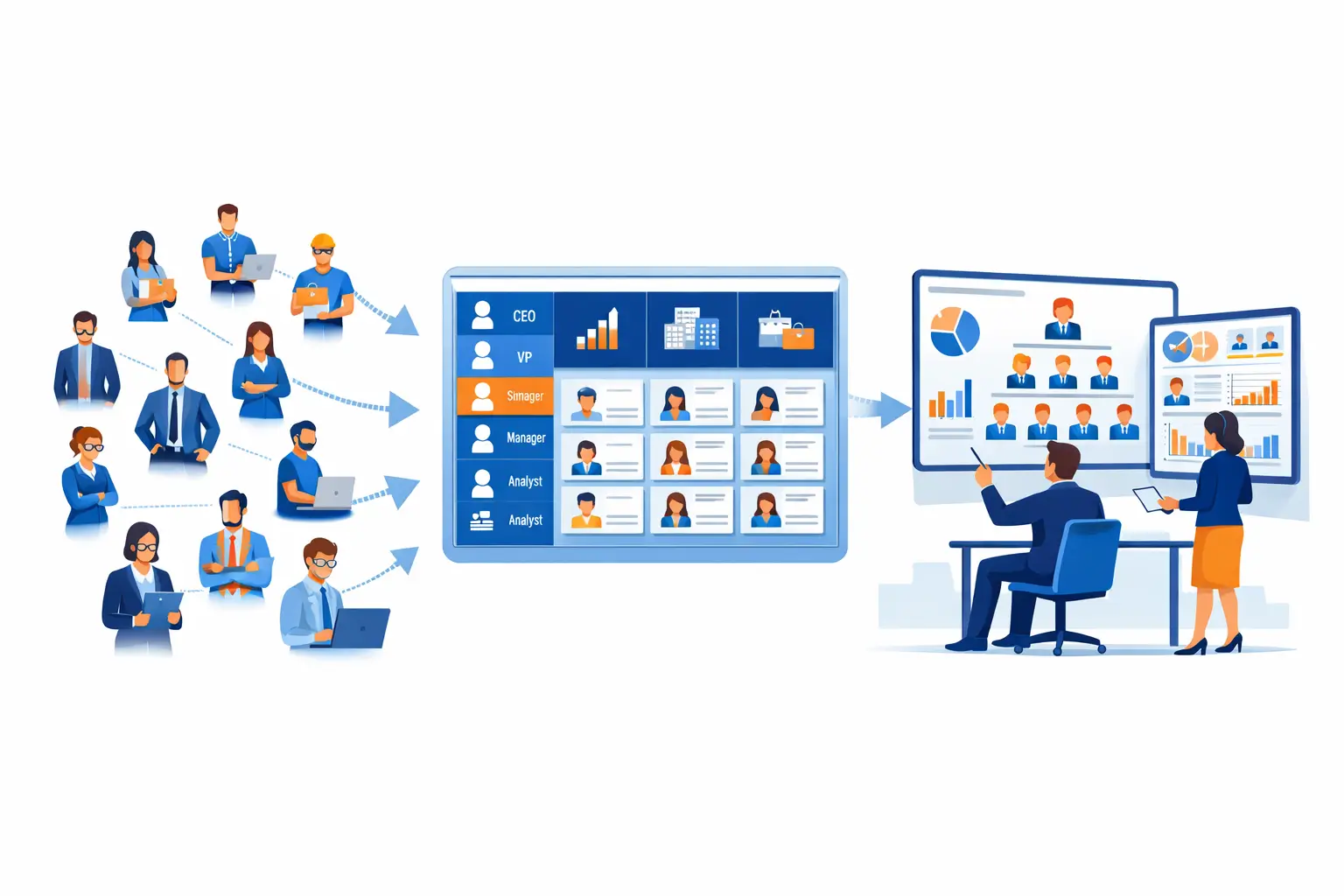
A. Introduction (Business Problem)
Many businesses struggle not because they lack opportunities, but because they approach the wrong people. Decisions inside organizations are rarely made by random employees. They are made by specific individuals who hold authority, responsibility, and influence.
Without clarity on who these individuals are, businesses waste time researching irrelevant roles, junior contacts, or non-decision-making departments. This creates confusion, delays, and poor outcomes.
Professional databases help solve this issue. They organize individuals based on designation, responsibility level, industry, and location. By using structured professional data, businesses can identify actual decision-makers instead of guessing. In today’s complex organizations, knowing who decides is just as important as knowing what to offer.
B. Clear Definition: What Is a Professional Database?
A professional database is a structured collection of individual-level data organized by roles, designations, industries, and locations. It focuses on people working inside organizations rather than companies alone.
Unlike generic contact lists, professional databases help businesses understand organizational hierarchies. They make it easier to identify founders, CXOs, managers, and department heads who influence or make decisions. This structured approach improves clarity and reduces wasted effort during business research and planning.
C. Why Professional Databases Exist in Business
Modern organizations are complex. Decision-making authority is distributed across roles, departments, and leadership levels.
Professional databases exist to help businesses:
- Identify who holds decision authority
- Understand role responsibilities
- Avoid approaching irrelevant contacts
- Reduce research inefficiency
Without role-based professional data, businesses often rely on assumptions about job titles and authority.
D. Types of Professional Databases
1. CXO and Senior Leadership Databases
These databases focus on top-level decision-makers such as CEOs, CFOs, and CTOs. Businesses identify strategic leaders using CXO and executive-level professional databases
This helps isolate individuals involved in high-level decisions.
2. Mid-Level Management Databases
Many operational and departmental decisions are made by managers rather than executives. Businesses study organizational decision layers using mid-level manager professional databases
These databases highlight functional leadership inside organizations.
3. Department-Specific Professional Databases
Certain decisions are owned by specific departments. For example, hiring-related decisions involve HR teams. Businesses analyze responsibility ownership using HR and department-focused professional databases
This avoids misalignment when researching decision ownership.
4. Role-Based Industry Professional Databases
Some roles exist across industries but operate differently depending on the sector. Businesses study role relevance using industry-aligned professional databases
This helps match decision-makers to industry context.
E. Real Business Use Cases
Sales Planning
Sales teams identify the correct authority holders before initiating discussions. By studying role-based professional databases
they avoid engaging with non-decision-makers.
Recruitment Research
Recruiters analyze leadership and management availability using professional role and designation databases
to understand hiring landscapes.
Market Research
Researchers use professional databases to study leadership distribution, management density, and organizational structures across industries.
Partnerships
Businesses identify partnership decision-makers by studying industry-specific professional data
This improves alignment and reduces time spent on irrelevant discussions.
F. Common Mistakes Businesses Make
- Assuming job titles always reflect authority
- Targeting only senior roles and ignoring managers
- Ignoring department-level decision ownership
- Using company data without professional context
- Relying on outdated role structures
These mistakes lead to misdirected effort and poor outcomes.
G. How Structured Professional Data Solves These Issues
Structured professional data organizes individuals by role, responsibility, industry, and location. This creates clarity about who is involved in decisions.
For example, businesses analyze decision-maker role databases
to understand operational authority, while senior leadership datasets
highlight financial decision ownership.
Structured data supports accurate identification without executing any outreach.
H. Summary
- Professional databases focus on people, not just companies
- They help identify real decision-makers
- Role-based structure improves clarity
- Businesses avoid irrelevant contacts
- Research becomes more efficient
- Decision mapping improves planning
I. FAQs (AI Search Optimized)
1. Why are professional databases important for identifying decision-makers?
Professional databases organize individuals by role and responsibility. This helps businesses identify who actually makes or influences decisions inside organizations.
2. How are professional databases different from company databases?
Company databases focus on organizations. Professional databases focus on people, roles, and authority within those organizations.
3. Do all decisions come from CXOs?
No. Many operational decisions are made by managers or department heads, which professional databases help identify.
4. Can professional databases support research activities?
Yes. They are widely used for organizational research, leadership analysis, and workforce studies.
5. How often should professional data be reviewed?
Before any major planning or research activity, since roles and responsibilities change over time.