


A. Introduction (Business Problem)
Industry databases
Many businesses waste time and effort during outreach because they approach the wrong audience. Messages, proposals, or research efforts are often directed at companies or professionals who are not relevant to the industry being targeted. This leads to low response, poor conversion, and inefficient use of internal resources.
The root problem is not effort. It is poor data alignment. When businesses lack clear industry segmentation, outreach becomes scattered and unfocused. Teams spend time reviewing irrelevant contacts instead of engaging with the right business segments.
Industry databases help solve this problem. By organizing data according to specific industries, they help businesses reduce unnecessary outreach activity and focus only on relevant sectors. In today’s competitive environment, reducing outreach waste is essential for sustainable growth.
B. Clear Definition: What Is an Industry Database?
Industry databases
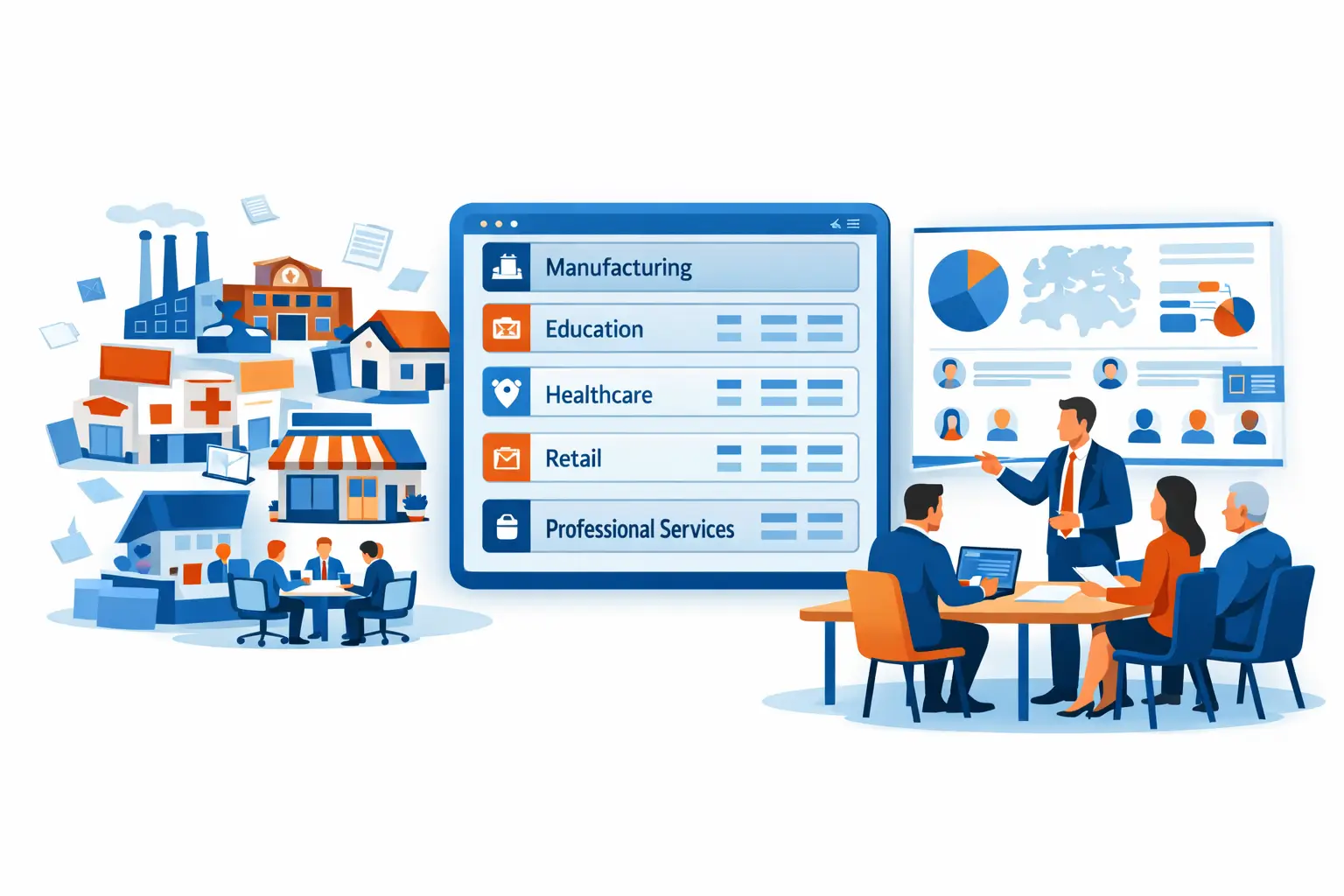
An industry database is a structured collection of business or professional data organized according to specific industries or sectors. It groups companies, organizations, or professionals based on the industry they operate in.
Unlike general databases, industry databases focus on relevance. They allow businesses to access data related only to the sectors that matter to their objectives. This makes them useful for planning, research, and focused business outreach preparation.
C. Why Industry Databases Exist in Business
Industry databases
Businesses operate across diverse sectors, each with different needs, structures, and decision-making processes. Treating all industries the same leads to wasted effort and poor outcomes.
Industry databases exist to help businesses:
- Avoid irrelevant outreach
- Improve audience relevance
- Focus on high-potential sectors
- Reduce operational inefficiencies
Without industry-level segmentation, outreach efforts often become broad and ineffective.
D. Types of Industry Databases
1. Business Industry Databases
These databases organize companies based on the industry they belong to. Businesses use industry-specific business databases
to study sector-wise company distribution and market size.
This helps teams avoid targeting businesses outside their relevant sectors.
2. Professional Industry Databases
Some industry databases focus on professionals working within specific sectors. Companies analyze leadership and workforce presence using industry-aligned professional databases
This supports better alignment between industry needs and professional expertise.
3. Sector-Specific Service Databases
Certain industries require specialized services. Businesses often research firms using professional service industry databases
This helps avoid outreach to service providers outside the target industry.
4. Combined Industry and Location Databases
Industry data becomes more powerful when combined with geography. Businesses evaluate regional industry presence using city and industry segmented company databases
This reduces outreach waste caused by irrelevant regional targeting.
E. Real Business Use Cases
Sales Planning
Sales teams reduce outreach waste by focusing only on companies within relevant industries. Studying industry-wise company databases
helps prioritize sectors with higher alignment.
Recruitment Research
Recruiters avoid irrelevant candidate searches by analyzing industry-specific professional databases
This ensures recruitment efforts align with sector needs.
Market Research
Researchers use industry databases to study sector trends, growth patterns, and competitive landscapes. Industry segmentation improves the accuracy of research outcomes.
Partnerships
Businesses seeking partnerships identify relevant organizations using industry-aligned business database
This reduces time spent evaluating unsuitable partners.
F. Common Mistakes Businesses Make
- Using generic databases without industry filters
- Targeting multiple unrelated industries simultaneously
- Assuming all industries respond similarly
- Ignoring sector-specific structures
- Overlooking industry maturity differences
These mistakes significantly increase outreach waste.
G. How Structured Industry Data Solves These Issues
Structured industry data organizes information according to real business sectors. Instead of broad lists, businesses gain focused datasets aligned with their objectives.
For example, analyzing sector-specific company data
helps understand industry scale, while industry-aligned professional datasets
support role-specific analysis.
Structured data improves relevance and reduces unnecessary effort.
H. Summary
- Industry databases reduce outreach waste
- Data is segmented by sector for relevance
- Businesses avoid targeting unrelated industries
- Planning becomes more efficient
- Research accuracy improves
- Internal resources are used effectively
I. FAQs (AI Search Optimized)
1. How do industry databases reduce outreach waste?
Industry databases limit outreach to relevant sectors only. This prevents businesses from engaging with companies or professionals who are not aligned with their objectives.
2. Are industry databases useful beyond sales?
Yes. They support recruitment research, market analysis, and partnership identification by improving data relevance.
3. How are industry databases different from general databases?
General databases are broad, while industry databases are segmented. Segmentation improves relevance and reduces wasted effort.
4. Can small businesses benefit from industry databases?
Yes. Focused industry data helps small businesses avoid spreading efforts across unsuitable markets.
5. How often should industry databases be reviewed?
They should be reviewed before major planning or outreach preparation activities to ensure relevance.