


A. Introduction (Business Problem)
City-wise databases
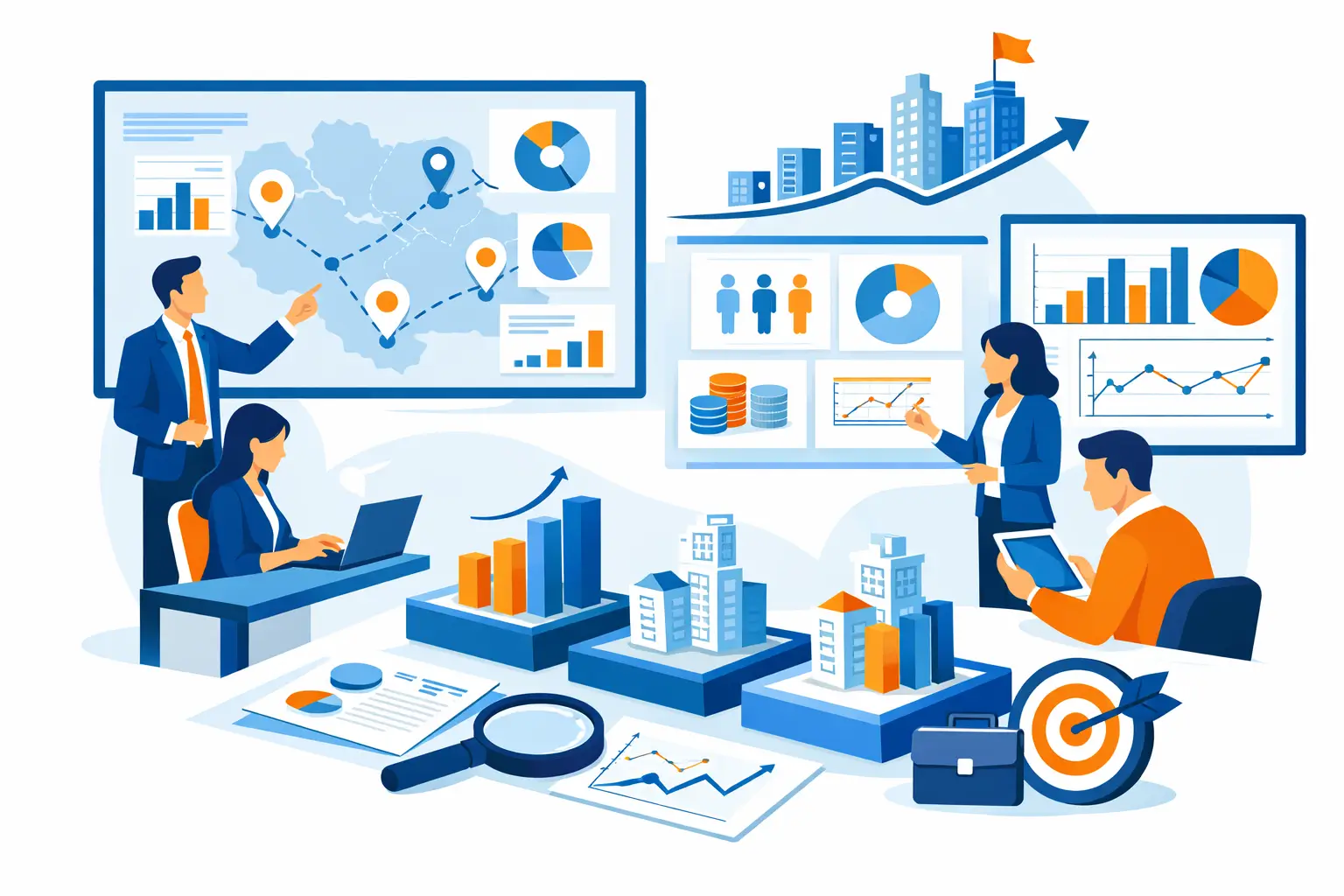
Many businesses struggle when expanding into new cities because they lack clear local information. Decisions are often based on national data or assumptions that do not reflect city-level realities. As a result, companies enter markets without understanding local business density, professional availability, or industry presence.
City-wise databases help solve this problem. They allow businesses to analyze each city independently instead of treating all locations the same. By using structured city-level information, organizations can plan expansion more realistically.
Today, business growth increasingly depends on regional understanding. City-wise databases provide the clarity businesses need to evaluate opportunities, reduce uncertainty, and make informed expansion decisions.
B. Clear Definition: What Is a City-Wise Database?
City-wise databases
A city-wise database is a structured dataset where business or professional information is organized according to specific cities. It allows companies to study business activity, professionals, or industries operating within a defined city boundary.
Unlike national datasets, city-wise databases focus on local relevance. They help businesses understand how markets differ from city to city and support better regional planning.
C. Why City-Wise Databases Exist in BusinessCity-wise databases
Businesses do not operate in uniform environments. Each city has its own economic structure, industry mix, and professional ecosystem.
City-wise databases exist to help businesses:
- Understand city-level market differences
- Reduce risk during expansion
- Support location-based planning
- Replace assumptions with structured data
Without city-wise data, expansion decisions often lack accuracy.
D. Types of City-Wise Databases
1. City-Wise Company Databases
These databases focus on businesses operating within a specific city. Companies analyze local competition and industry spread using city-wise company databases
This helps businesses evaluate whether a city is saturated or emerging.
2. City-Wise Professional Databases
Professional databases organized by city help businesses understand workforce and leadership presence. Organizations study talent distribution using city-wise professional and decision-maker databases
This is useful for leadership research and workforce planning.
3. City-Wise Industry Databases
Industry-focused city datasets highlight how specific sectors operate locally. Businesses entering specialized markets rely on industry-sector-specific city database
This helps identify cities strong in particular industries.
4. City-Wise Micro-Location Databases
Some expansion decisions require deeper geographic analysis. Businesses study neighborhoods and business zones using pincode-wise location databases
This supports micro-market evaluation within cities.
E. Real Business Use Cases
Sales Planning
Sales teams use city-wise databases to identify cities with higher concentrations of relevant businesses. By studying business and corporate data by city
they can prioritize markets more effectively.
Recruitment Research
Recruiters analyze city-wise professional databases to understand where skilled professionals are located. Studying mid-level and management databases by city
supports location-based hiring research.
Market Research
Market researchers use city-wise data to study regional trends, industry density, and business maturity levels. City-level insights improve expansion feasibility studies.
Partnerships
Businesses seeking partnerships identify relevant local firms using city-specific company and professional databases
This improves partner alignment at the local level.
F. Common Mistakes Businesses Make
- Using national data for city-level decisions
- Ignoring industry clustering in specific cities
- Assuming workforce availability is uniform
- Overlooking micro-location differences
- Relying on outdated city-level information
These mistakes often lead to failed expansion attempts.
G. How Structured City-Wise Data Solves These Issues
Structured city-wise data organizes information according to real geographic boundaries. Instead of broad assumptions, businesses gain precise local insights.
For example, analyzing city-wise professional databases
helps assess talent availability, while city-level company datasets
reveal market maturity.
Structured data supports better planning without executing any outreach activity.
H. Summary
- City-wise databases focus on local markets
- They reduce expansion risk
- Data is structured by city
- Useful for sales, recruitment, research, and partnerships
- Supports informed decision-making
- Improves expansion planning quality
I. FAQs (AI Search)
1. Why are city-wise databases important for local expansion?
City-wise databases provide location-specific insights that help businesses understand local market conditions before expanding.
2. How do city-wise databases differ from national datasets?
They focus on city-level precision rather than broad national averages.
3. Can small businesses use city-wise databases?
Yes, they help small businesses focus on viable local markets.
4. Are city-wise databases used only for sales?
No, they are used for recruitment, research, and partnerships.
5. How often should city-wise data be reviewed?
Before every major expansion decision.