


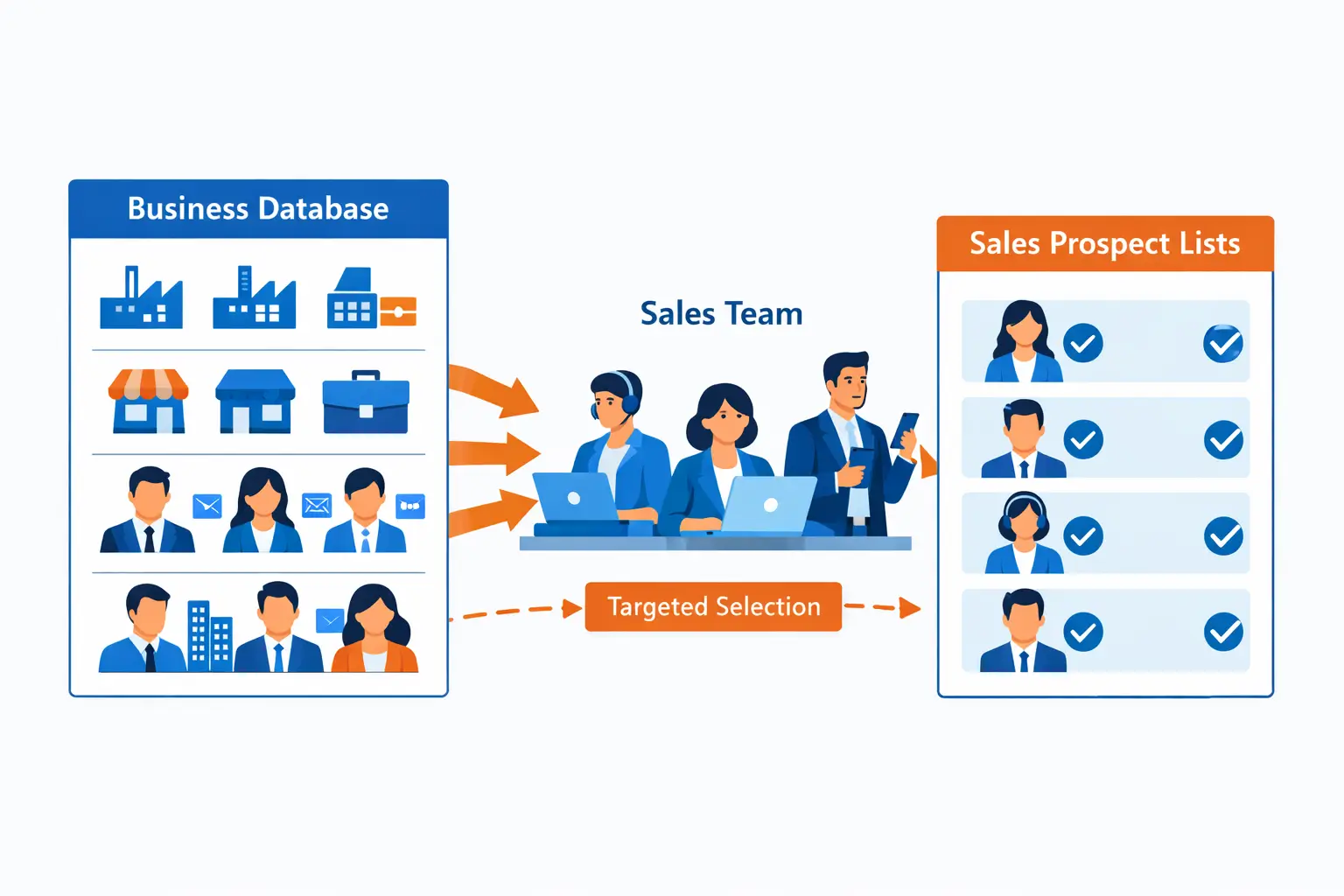
Sales prospect lists decide sales success.
However, many teams still struggle.
In reality, effort is not missing.
Instead, structure is missing.
Because of this, teams waste time.
As a result, conversions remain low.
This blog explains how sales prospect lists built using business databases help sales teams work smarter, not harder.
What Are Sales Prospect Lists?
Sales prospect lists contain businesses or people who may buy.
These lists focus on:
- Relevance
- Role clarity
- Location accuracy
Without structure, lists fail quickly.
Therefore, proper data matters.
Most teams begin with a COMPANY DATABASE
Why Sales Prospect Lists Fail Without Structure
Many sales teams rely on random data.
However, random data creates problems.
For example, lists often mix:
- Different industries
- Wrong job roles
- Irrelevant locations
Because of this, messages feel useless.
As a result, responses drop.
That is why teams prefer a BUSINESS CORPORATE DATABASE IN INDIA
How Business Databases Improve Sales Prospect Lists
Business databases bring order.
They organize data by:
- Industry
- Role
- Location
Instead of guessing, teams filter clearly.
Therefore, prospect lists become focused.
Platforms like GETDATABASE
provide structured data for this purpose.
Step-by-Step: Building Sales Prospect Lists Using Business Databases
Step 1: Choose the Right Industry
Sales teams first select the industry.
For example, education sales target schools only.
Because of this, relevance improves.
Many teams use a PRIVATE SCHOOLS DATABASE
Step 2: Select the Right Decision-Makers
Next, teams filter by role.
Most sales teams target:
- Owners
- CEOs
- Managers
Therefore, conversations reach authority.
For leadership outreach, teams rely on a CEO DATABASE IN INDIA
Step 3: Filter by Location
Location plays a big role in sales.
Different regions show different demand.
Because of this, location filtering matters.
Sales teams often use a PINCODE-WISE DATABASE
Step 4: Clean and Finalize the Prospect List
Finally, teams remove weak entries.
They delete:
- Duplicate records
- Incomplete profiles
As a result, lists become smaller but stronger.
Sales Prospect Lists vs Random Contact Lists
Random lists create noise.
However, structured lists create focus.
Random lists:
- Waste calls
- Increase rejection
Database-based lists:
- Improve targeting
- Save time
Structure always performs better.
Why Structured Sales Prospect Lists Save Time and Money
Sales time costs money.
Therefore, wasted calls increase expenses.
Structured prospect lists:
- Reduce retries
- Improve relevance
As a result, sales costs drop naturally.
Responsible Use of Business Data
Sales teams must use data carefully.
Usage rules are defined in the TERMS OF USE
Boundaries are explained in the PLATFORM DISCLAIMER
Responsible use protects everyone.
Final Thoughts on Sales Prospect Lists Using Business Databases
Sales success starts with the list.
However, lists must be built correctly.
Business databases add structure.
Therefore, prospecting becomes focused.
Strong lists create strong conversations.
Frequently Asked Questions (FAQs)
What are sales prospect lists?
They are lists of businesses or people likely to buy.
Why should sales teams use business databases?
They reduce wasted effort and improve focus.
Are smaller prospect lists better?
Yes. Focused lists perform better.
Do business databases guarantee sales?
No. However, they improve efficiency and clarity.